Adl: Justice and Fairness for Class 8 Pupils
Adl means justice and fairness: giving each person their due, judging honestly, and refusing to favour one side unfairly. For Class 8 pupils, justice is not only a courtroom idea. It appears in fair marking, sharing materials, choosing teams, and listening before deciding who is at fault. This guide explains Adl with school examples, including fair marking, sharing, and standing up for what is right. You will learn how fairness works in small daily choices, why it protects trust, and how to act justly even when it is unpopular. Keep your STBB book nearby and test each idea against your own classroom experience.
What Adl Means in Daily Life
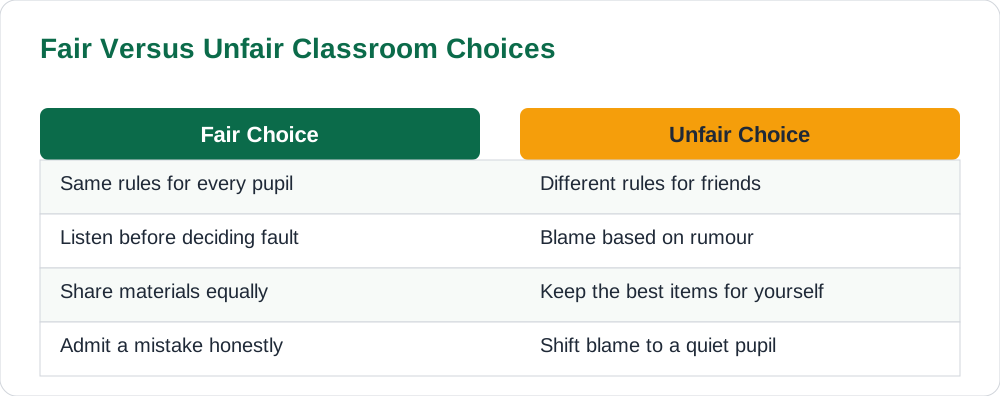
Adl means treating people by the same fair standard, whether they are your friend or not. A just pupil does not give extra marks to a friend, blame a quiet pupil, or hide a mistake to protect a favourite. Fairness requires honesty about facts and courage to accept what the facts show, even when the result is uncomfortable.
Justice also means proportion. A small mistake deserves a small correction, not a harsh punishment. A good effort deserves recognition, even if the result was imperfect. When pupils practise this balance, the classroom feels safer because everyone knows the same rules apply to all. The solved notes can help you revise the lesson's key ideas.
- Same standard: apply the same rules to friends and others.
- Honest facts: judge by what happened, not by rumour.
- Fair proportion: match the response to the size of the act.
- Courage: accept a fair result even when it favours another side.
Fairness in Marking and Group Work
Marking feels fair when the same criteria apply to every paper. If you mark a classmate's quiz during peer review, follow the answer guide exactly and do not add or remove marks for friendship. If you feel unsure, ask the teacher rather than guessing. Honest marking protects both the pupil who worked hard and the pupil who needs real feedback.
Group work also needs fairness. Divide tasks by ability and time, not by popularity. Credit every member's contribution, including the quiet pupil who organised notes or checked answers. When work is divided fairly, groups finish faster and quarrels fall. Unfair groups, by contrast, breed resentment that lasts beyond one project.
Fairness in Sharing and Games
Sharing is a daily justice test. In class, it means sharing books, pens, and teacher attention without grabbing the best for yourself. In games, it means picking teams fairly, following the same rules, and accepting the referee's decision. A pupil who bends rules to win may gain a game but loses trust.
Fair play also means including pupils who are slower or less confident. Give them real turns, not token turns. Encourage them by name and celebrate their effort. Fairness in games teaches a larger lesson: strength is shown by protecting the rules, not by breaking them for advantage.
- Share books and materials without grabbing the best.
- Pick teams fairly and rotate turns.
- Follow the same rules for every player.
- Accept the referee's decision without arguing.
Listening Before Judging
Justice begins with listening. When two pupils disagree about what happened, a fair pupil listens to both sides before forming an opinion. Ask what each person saw, what evidence exists, and what might have been misunderstood. This habit prevents quick blame and protects pupils who are often judged unfairly.
Listening does not mean agreeing with everyone. It means giving each side a fair hearing before deciding. If the matter is serious, involve a teacher rather than settling it through argument. Fair pupils prefer a calm, evidence-based decision to a loud, rushed one.
Standing Up for What Is Right
Standing up for fairness can feel risky, especially when friends expect silence. You can still act justly in safe, calm ways: say that teasing is unfair, invite an excluded pupil to join, or report bullying to a teacher. You do not need to shout or confront aggressively. A steady, truthful sentence often carries more weight than a loud protest.
If you witness unfairness and feel afraid, tell a trusted adult. That is not tale-telling; it is protecting justice. Over time, pupils who stand up for fairness make the classroom safer for everyone, including themselves. For a companion lesson, read the guide on encouraging good and explore more in the blog.
AI Help: Muse AI
Muse AI is Meta's personal AI assistant, and it can help you practise Adl by talking through a fair way to divide group work or settle a classroom disagreement. Muse AI does not give official STBB answers — always verify against your STBB book and your teacher. Always check any lesson summary against your Sindh Textbook Board book before using it in class.
Join Muse with invite code LTGSWD — in the Muse app, go to Settings > Redeem token and enter the code.
Disclosure: LTGSWD is the author's Muse invite code.
5 key points you must know
- Adl means giving each person their due by the same fair standard.
- Fair marking follows the guide exactly, without favour for friends.
- Fair group work divides tasks clearly and credits every member.
- Listening to both sides before judging prevents unfair blame.
- Standing up for fairness can be calm, safe, and truthful.
Frequently asked questions
What does Adl mean for a Class 8 pupil?
It means justice and fairness in daily choices: same rules for all, honest judgement, fair sharing, and listening before deciding who is at fault.
How can I mark a classmate's work fairly?
Follow the answer guide exactly, apply the same standard to every paper, and ask the teacher when you are unsure instead of guessing.
What makes group work fair?
Clear task division, credit for every contribution, equal turns, and honest reporting of who did what.
How do I stand up for fairness safely?
Speak calmly, include excluded pupils, refuse to join unfair teasing, and tell a trusted teacher when the matter is serious.
Solved notes — preview free
These guides work best with the solved exercises. Preview the solved notes free on this website — 119 solved notes for Classes 6–10 in Sindhi, Urdu, English and Arabic medium. Or browse the full solved notes catalogue for your class and medium. New solved notes are added regularly — check the catalogue for coming-soon books.