Ikhlaas: Sincerity of Intention for Class 8 Pupils
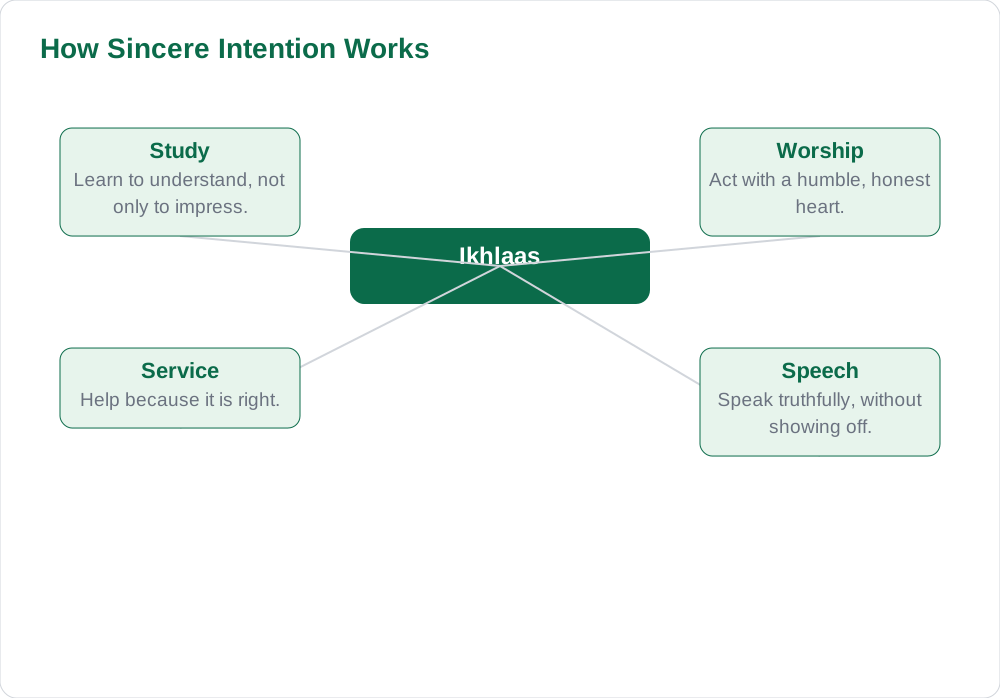
Ikhlaas means sincerity of intention: doing good work for the right reason, not for praise, show, or reward. For Class 8 pupils, intention shapes everyday choices. Do you study to truly learn, or only to impress others? Do you help a classmate because it is right, or because someone is watching? This guide shows how sincere intention changes study, worship, and helping others. It gives practical examples you can test in your own school day, without pretending that intentions are easy to keep pure. Sincere intention is a habit you strengthen by checking yourself honestly and returning to the right reason again and again.
What Sincere Intention Means
Sincere intention means your inner reason matches your outward action. If you clean the classroom, you do it because the room should be clean, not because you want a teacher's praise. If you answer a question, you answer to help, not to show off. People may not always see intention, but they feel its effect in the consistency of your behaviour.
Sincerity does not mean hiding good deeds or refusing appreciation. It means appreciation is not the reason you acted. A pupil with Ikhlaas keeps helping even when nobody thanks them. That steadiness is the clearest sign that intention is sincere. Check your own reasons gently, and correct them without harsh self-blame. The solved notes can help you revise this lesson's ideas.
- Right reason: act because the action itself is good and right.
- Steady effort: keep helping even when nobody notices.
- No show: avoid doing good deeds only to be seen.
- Honest check: ask yourself why you acted, then adjust.
Sincerity in Study
In study, sincerity means learning for understanding rather than for marks alone. A sincere pupil reads the chapter, tries the questions, and admits confusion instead of copying answers. Marks may follow, but they are not the only goal. Understanding lasts longer than memorised answers and helps in later classes too.
Sincere study also changes how you use help. You ask questions to learn, not to get someone else to finish your work. You revise honestly, even when it feels slow. If you want extra revision support, browse the books and the blog for study guides that keep the focus on real learning.
Sincerity in Worship and Daily Duties
In worship and daily duties, sincerity means acting with a humble heart and full attention. Rushing through a duty while thinking about something else weakens its meaning. Slowing down, understanding what you are doing, and keeping your focus helps sincerity grow. Pupils can practise this by doing one duty at a time with care.
Sincerity also applies to small duties at home and school: keeping your desk tidy, completing chores, and arriving on time. When these duties are done sincerely, they become part of good character rather than a performance. Check the lesson in your STBB book and discuss its examples with your teacher for the full meaning.
- Slow down and give each duty full attention.
- Understand what you are doing, not just the steps.
- Do small duties well, even when nobody checks.
- Return to the right reason when your mind drifts.
Sincerity in Helping Others
Helping others tests sincerity most clearly. It is easy to help when friends praise you and hard to help when nobody notices. A sincere pupil helps in both cases. That help might be explaining a lesson, sharing notes, or comforting a sad classmate. The value lies in the help itself, not in the recognition that follows.
Sincere help also respects the other person. Offer help kindly, without making the other pupil feel small. Accept a refusal gracefully. If you cannot help, say so honestly instead of making a false promise. These small courtesies keep sincerity visible in everyday school relationships.
Checking Your Intention Each Day
A short daily check keeps intention honest. Before an important task, ask: why am I doing this? After the task, ask: did my reason stay honest? If you notice show or pride creeping in, correct it quietly and try again. This is not about guilt. It is about training the heart to prefer truth over appearance.
Over weeks, this check makes your work steadier and your friendships warmer. People trust pupils whose reasons stay consistent. For a companion lesson on steady conduct, read the guide on noble character and keep practising one sincere action each day.
AI Help: Muse AI
Muse AI is Meta's personal AI assistant, and it can help you explore sincerity of intention by suggesting reflection questions for your study and helping habits. Muse AI does not give official STBB answers — always verify against your STBB book and your teacher. Always check any lesson summary against your Sindh Textbook Board book before using it in class.
Join Muse with invite code LTGSWD — in the Muse app, go to Settings > Redeem token and enter the code.
Disclosure: LTGSWD is the author's Muse invite code.
5 key points you must know
- Ikhlaas means doing good for the right reason, not for praise or show.
- Sincere study aims at understanding, not only at marks.
- Sincere worship and duties need attention and a humble heart.
- Sincere help continues even when nobody notices or thanks you.
- A daily intention check keeps your reasons honest and steady.
Frequently asked questions
What does Ikhlaas mean for a Class 8 pupil?
It means sincerity of intention: doing study, duties, and good deeds for the right reason, not for praise, show, or reward.
How can I study with sincerity?
Aim to understand the lesson, admit confusion honestly, ask questions to learn, and avoid copying answers or pretending to know what you do not.
Does sincerity mean hiding good deeds?
No. It means praise is not your reason. You can accept thanks gracefully while continuing to help even when nobody notices.
How do I check my intention?
Before and after a task, ask why you are doing it. If the reason was show or pride, correct it quietly and return to the right reason.
Solved notes — preview free
These guides work best with the solved exercises. Preview the solved notes free on this website — 119 solved notes for Classes 6–10 in Sindhi, Urdu, English and Arabic medium. Or browse the full solved notes catalogue for your class and medium. New solved notes are added regularly — check the catalogue for coming-soon books.