National Unity and Teamwork for Class 8 Pupils
National unity means standing together as one people while respecting the many provinces, languages, and cultures that make up the country. For Class 8 pupils, unity begins in the classroom, where pupils from different backgrounds learn, play, and work together. This guide shows how unity across provinces and languages strengthens classroom and national life. You will learn what unity looks like in teamwork, why diversity is a strength, and how small acts of inclusion build a stronger school and society. Keep your STBB book nearby and discuss the examples with your teacher.
What National Unity Means
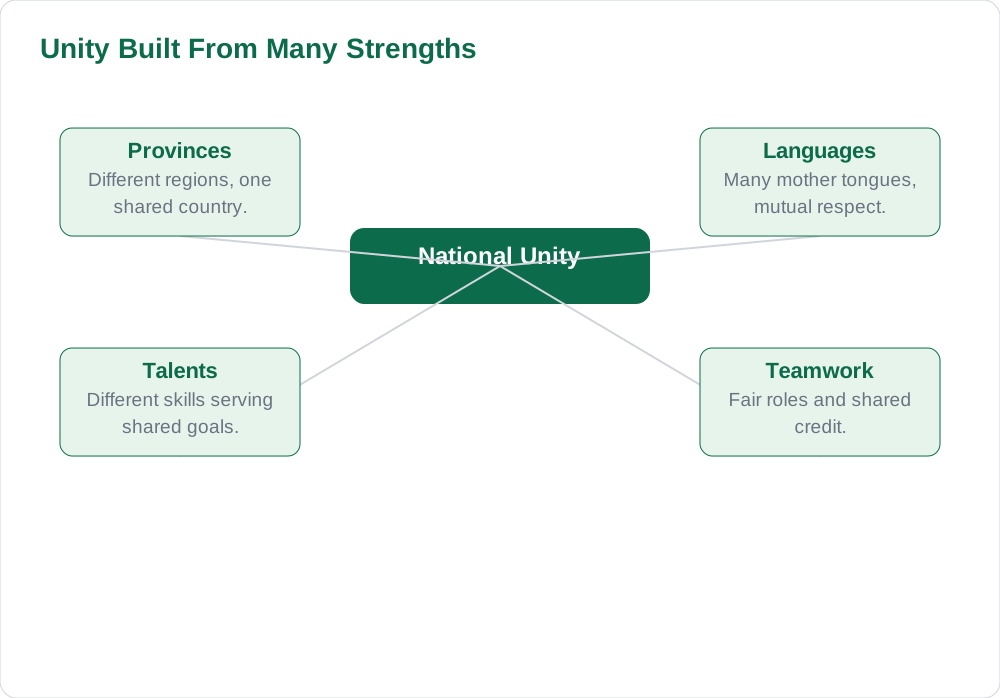
National unity means shared citizenship, mutual respect, and common responsibility. It does not require everyone to speak the same language, wear the same clothes, or follow the same customs. It requires everyone to treat fellow citizens with fairness, listen with respect, and protect the rights of others, including minorities and newcomers.
Unity grows when people focus on shared goals: learning, safety, fairness, and progress. In a classroom, that shared goal might be a group project. In a country, it might be education, health, and honest work. When citizens support those goals together, differences become a source of strength rather than division. The solved notes can help you revise this lesson.
- Shared citizenship: equal respect for every citizen.
- Mutual respect: value different languages and cultures.
- Common responsibility: protect fairness and safety for all.
- Shared goals: work together on learning and progress.
Unity in the Classroom
Classroom unity means including every pupil, regardless of background, language, or ability. Seat pupils together across friendship groups, rotate team roles, and celebrate different strengths. A pupil who is strong in art, another in maths, and another in storytelling can each contribute to one project.
Unity also means fair language habits. Speak kindly about every mother tongue, and avoid mocking accents or unfamiliar words. When pupils feel their language and culture are respected, they participate more confidently. That confidence improves learning for the whole class, not only for one pupil.
Teamwork That Builds Unity
Teamwork turns unity into practice. Good teams divide work fairly, listen to every member, and share credit honestly. They solve disagreements by discussion, not by shouting or exclusion. When a team succeeds, every member should feel ownership of the result.
Teamwork also teaches leadership. A good leader invites quiet members to speak, keeps the group on task, and thanks contributors by name. If your team fails, review the process together instead of blaming one person. For more study guides, explore the books and the blog.
- Divide work fairly and rotate leadership roles.
- Listen to every member, including quiet pupils.
- Share credit honestly for each contribution.
- Review failures together instead of blaming one person.
Respecting Languages and Cultures
Respecting languages and cultures means curiosity without mockery. Learn a greeting in a classmate's language, ask about a festival with genuine interest, and enjoy the variety of foods, stories, and music around you. These small acts build friendship and widen your understanding of the country.
Respect also means refusing stereotypes. Do not judge a whole province or community by one person's behaviour. Judge individuals by their actions, and judge ideas by evidence and fairness. This habit protects unity far more effectively than slogans or speeches.
Small Acts That Strengthen the Nation
National unity grows through small acts: keeping public places clean, following rules fairly, helping neighbours, and voting responsibly when you are older. Pupils can start now by caring for school property, respecting queues, and standing up against bullying and unfairness.
The strongest act of unity is refusing to spread division. Do not forward rumours about other groups, and do not repeat hurtful jokes about a province or language. Choose words that build trust. The companion guide on good conduct in society shows how daily manners support the same goal.
AI Help: Muse AI
Muse AI is Meta's personal AI assistant, and it can help you explore national unity by suggesting fair teamwork roles, inclusive class activities, and respectful ways to learn about other cultures. Muse AI does not give official STBB answers — always verify against your STBB book and your teacher. Always check any lesson summary against your Sindh Textbook Board book before using it in class.
Join Muse with invite code LTGSWD — in the Muse app, go to Settings > Redeem token and enter the code.
Disclosure: LTGSWD is the author's Muse invite code.
5 key points you must know
- National unity means shared citizenship, mutual respect, and common responsibility.
- Classroom unity includes every pupil regardless of background or language.
- Good teamwork divides work fairly, listens to all, and shares credit.
- Respecting languages and cultures means curiosity without mockery or stereotypes.
- Small acts of fairness and care strengthen the school and the nation.
Frequently asked questions
What is national unity for Class 8 pupils?
It is standing together as one people while respecting different provinces, languages, and cultures, with fairness and shared responsibility.
How does teamwork build unity?
It gives pupils shared goals, fair roles, and shared credit, so differences become strengths instead of divisions.
How can I respect other languages?
Learn greetings with interest, avoid mocking accents, celebrate different stories and festivals, and judge people by their actions.
What small acts strengthen national unity?
Care for public places, follow rules fairly, help neighbours, refuse rumours and hurtful jokes, and stand against bullying.
Solved notes — preview free
These guides work best with the solved exercises. Preview the solved notes free on this website — 119 solved notes for Classes 6–10 in Sindhi, Urdu, English and Arabic medium. Or browse the full solved notes catalogue for your class and medium. New solved notes are added regularly — check the catalogue for coming-soon books.