Pakistan's Relations with Neighbours: A Pupil Guide
Pakistan's relations with neighbours — a pupil guide — starts with a simple idea: no country lives alone. Every country has neighbours, and how it treats them shapes its safety, trade, and future. Foreign policy is the plan a country follows in dealing with other countries. It covers peace, trade, borders, and shared problems like water and climate. This article explains foreign policy basics through neighbourhood, trade, and peace themes, in language any pupil can follow. You will learn what foreign policy means, why neighbours matter for trade and peace, and how countries settle disagreements without fighting.
What Is Foreign Policy?
Foreign policy is a country's plan for dealing with the rest of the world. It answers questions such as: which countries will we trade with, how will we settle border disagreements, and how will we work together on shared problems? The government carries out foreign policy through its foreign office, its embassies abroad, and its leaders' visits and talks.
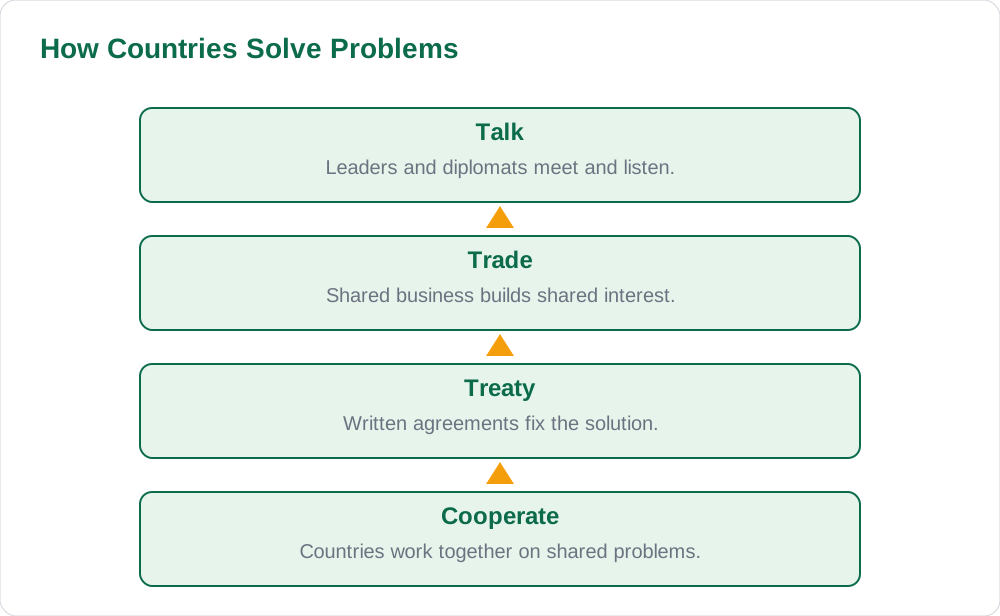
A good foreign policy protects the country's safety and interests while keeping peace. It uses talks, trade, and treaties before force. Pupils can think of it like good manners between neighbours: listen first, keep your promises, solve problems by talking, and never make trouble for fun. Browse the blog listing for more Pakistan Studies guides.
Neighbours and Geography
Pakistan shares borders with several neighbours: China to the north, India to the east, Iran to the west, and Afghanistan to the north-west, with the Arabian Sea to the south. Geography makes neighbours important. They share rivers, roads, mountain passes, and sea routes. What happens in one country often affects the next.
Good relations with neighbours bring real benefits: safer borders, easier trade, and shared projects such as roads and energy links. Bad relations bring the opposite: closed borders, fear, and wasted money on conflict. That is why every government works to keep neighbourly relations as friendly as possible.
Trade: Why Neighbours Matter
Trade is one of the strongest bonds between neighbours. When countries buy and sell from each other, both sides gain. Farmers sell produce, factories sell goods, and shoppers get more choice at better prices. Trade also gives countries a reason to stay peaceful: nobody wants to fight a good customer.
Borders can be gates or walls. Open, well-managed borders let goods, travellers, and ideas move. Closed borders stop all three. Pupils can see trade at work in any market: goods from many places sit on the same shelf, and each one arrived through a chain of roads, ports, and agreements.
- Trade gives both sides goods, jobs, and better prices.
- Good customers have a reason to stay peaceful.
- Open borders let goods, travellers, and ideas move.
- Markets show trade at work on every shelf.
Peace and Problem-Solving
Disagreements between neighbours are normal. Borders, water, and history can all cause arguments. The question is how countries handle them. Peaceful countries use talks, mediators, and international law. They sign agreements and keep them. They avoid threats and insults that make talks harder.
International organisations, such as the United Nations, give countries a place to talk and rules to follow. Pakistan takes part in these bodies and works with other countries on peace, development, and shared problems. A pupil should remember that peace is not weakness; it takes more courage to negotiate than to shout.
What Pupils Can Learn From Foreign Policy
Foreign policy teaches lessons for daily life. Listen before you judge. Keep your promises. Solve problems by talking, not by fighting. Look for win-win answers where both sides gain. These are the same rules that make a classroom, a team, or a family work well.
Try this exercise: pick one neighbour of Pakistan and list three things the two countries share — a border, a trade good, or a shared problem. Then list one way they could cooperate. That short exercise is the heart of foreign policy thinking. Find more study help in the solved notes and on the books page.
- Listen before you judge, in talks and in class.
- Keep promises — trust is built on kept words.
- Solve problems by talking, not by fighting.
- Look for win-win answers where both sides gain.
AI Help: Muse AI
Muse AI is Meta's personal AI assistant, and it can help you explain foreign policy basics by turning neighbourhood, trade, and peace into a short example you can present in class. Muse AI does not give official STBB answers — always verify against your STBB book and your teacher. For final wording, always check your Sindh Textbook Board book and ask your teacher.
Join Muse with invite code LTGSWD — in the Muse app, go to Settings > Redeem token and enter the code.
Disclosure: LTGSWD is the author's Muse invite code.
5 key points you must know
- Foreign policy is a country's plan for dealing with other countries.
- Pakistan's neighbours include China, India, Iran, and Afghanistan.
- Trade gives neighbours shared interests and reasons to stay peaceful.
- Disagreements should be solved by talks, treaties, and international law.
- Peace, promises, and win-win thinking guide good foreign policy.
Frequently asked questions
What is foreign policy in simple words?
It is a country's plan for dealing with other countries — covering peace, trade, borders, and shared problems — carried out through its foreign office, embassies, and leaders' talks.
Which countries neighbour Pakistan?
China lies to the north, India to the east, Iran to the west, and Afghanistan to the north-west, with the Arabian Sea to the south.
Why does trade help peace?
Trade gives both sides goods, jobs, and better prices. Countries that trade gain a reason to stay peaceful, because nobody wants to fight a good customer.
How do countries solve disagreements peacefully?
Through talks, mediators, treaties, and international law, often with help from international organisations that give countries a place to negotiate.
Solved notes — preview free
These guides work best with the solved exercises. Preview the solved notes free on this website — 119 solved notes for Classes 6–10 in Sindhi, Urdu, English and Arabic medium. Or browse the full solved notes catalogue for your class and medium. New solved notes are added regularly — check the catalogue for coming-soon books.