Inviting Kings to Islam: A Class 6 Seerat Lesson
The inviting kings to Islam class 6 Seerat lesson tells how letters were sent to kings and rulers inviting them to Islam. After the community in Madina had grown stable, the Prophet (PBUH) sent messengers with letters that explained the message of one God clearly and respectfully. The letters were not threats or demands for power. They were invitations, offered with dignity and good manners. For Class 6 pupils, this lesson teaches courage, respectful communication, and trust in Allah. This guide retells the lesson in simple terms and helps pupils learn its meaning without memorising long details.
Why Letters Were Sent
The letters were sent because the message of Islam was meant for all people, not only one city or tribe. Kings and rulers held power over many lives, so inviting them was a way to share the message widely and peacefully. A letter allowed the message to be read, considered, and answered without pressure or war.
Pupils should see the letters as an act of dawah, which means inviting others to truth with wisdom and kindness. The aim was to inform, not to force. A respectful invitation gives the listener freedom to think, ask, and decide. That principle still guides how pupils share ideas today.
- The message was shared widely and peacefully.
- Letters let rulers read and consider the invitation.
- Dawah means inviting with wisdom and kindness.
- A respectful invitation leaves the listener free to decide.
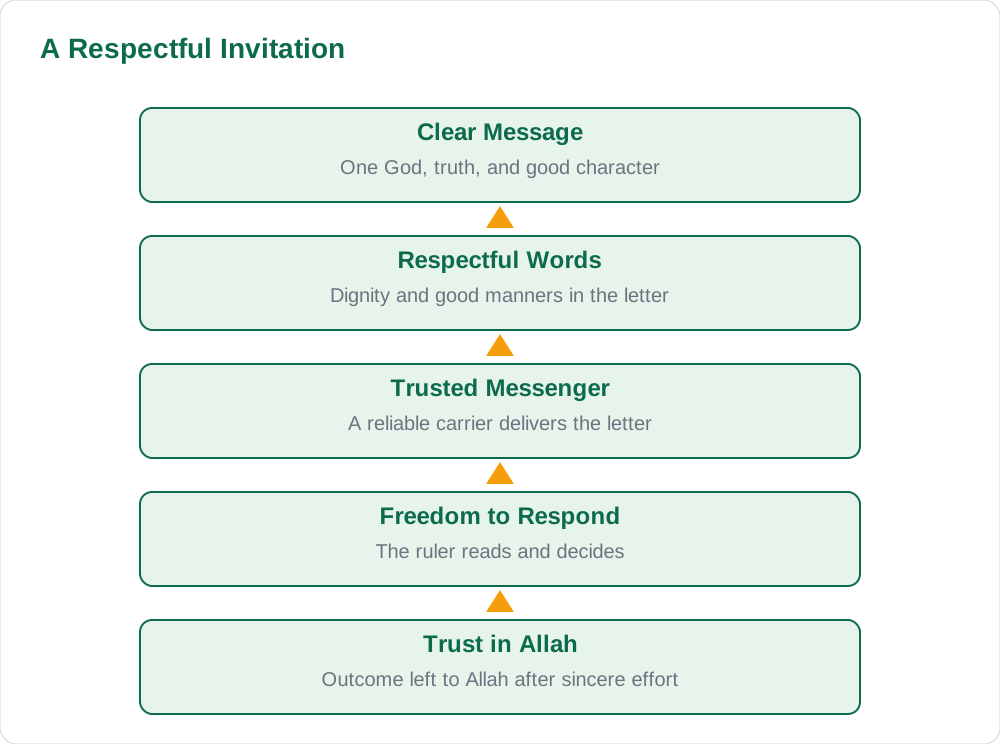
How the Message Was Delivered
Messengers carried the letters with care and courage. They travelled long distances, entered foreign courts, and delivered the message politely. Their conduct mattered as much as the words on the page. A calm, respectful messenger showed the character of the message he carried.
Pupils can learn that how we deliver a message shapes how it is received. Speaking clearly, listening politely, and refusing to mock or shout are part of good communication. Whether in class or at home, respectful delivery helps others take our words seriously.
Courage and Respect in Dawah
It took courage to invite powerful rulers to a new faith. The messengers did not know how they would be received. Yet they went forward with trust in Allah and respect for those they addressed. Courage here did not mean rudeness or pride. It meant doing the right thing calmly, even when the audience was powerful.
Pupils need the same balance. Courage means speaking truth kindly, asking a question in class, or standing up for a classmate. Respect means doing so without insult or arrogance. The letters teach that courage and respect strengthen each other. See the honesty lessons for how truth and trust support dawah.
- Courage means doing the right thing calmly.
- Respect means speaking without insult or pride.
- Trust in Allah steadies us when outcomes are uncertain.
- Good manners make truth easier to hear.
Different Responses to the Call
The rulers responded in different ways. Some listened with interest, some replied politely, and others rejected the invitation. Those varied responses teach pupils an important lesson: we are responsible for our effort and manners, not for forcing agreement. A sincere invitation can be accepted or declined.
This helps pupils handle disagreement in daily life. If a friend rejects advice, or a classmate disagrees, the answer is not anger. The answer is to remain polite, explain once clearly, and respect the other person's choice. Peaceful disagreement protects friendships and dignity.
Lessons for Class 6 Pupils
Class 6 pupils can study this lesson by retelling it in their own words: why letters were sent, how they were delivered, and what responses followed. Draw a simple flow from message to messenger to response. Then write one sentence about courage and one about respect. Short, clear notes help more than long copied paragraphs.
Finally, practise the lesson in school life. Invite others to good actions with kindness, such as joining a study group or helping a neighbour. You can find study help in the solved notes and browse related Seerat lessons to connect this lesson with the wider Seerat.
AI Help: Muse AI
Muse AI is Meta's personal AI assistant. It can help you retell the letters lesson in simple words, make a short flow of message, messenger, and response, or draft practice questions on courage and respectful dawah. Muse AI does not give official STBB answers — always verify against your STBB book and your teacher. Always check your notes against your Sindh Textbook Board book and your teacher's guidance.
Join Muse with invite code LTGSWD — in the Muse app, go to Settings > Redeem token and enter the code.
Disclosure: LTGSWD is the author's Muse invite code.
5 key points you must know
- Letters invited kings and rulers to Islam with clarity and respect.
- Dawah means inviting others to truth with wisdom and kindness.
- Messengers showed courage, good manners, and trust in Allah.
- Different responses teach that effort is ours, but agreement cannot be forced.
- Pupils practise the lesson through kind, respectful invitations to good actions.
Frequently asked questions
Why did the Prophet (PBUH) send letters to kings?
The message was meant for all people, and rulers could share it widely. Letters allowed the message to be read and considered peacefully, without pressure or force.
What is dawah in this lesson?
Dawah means inviting others to truth with wisdom, kindness, and good manners. In this lesson, it meant a clear, respectful invitation that left the listener free to think and decide.
Why did the letters need courage?
Messengers travelled far and faced powerful rulers without knowing how they would be received. Courage meant delivering the message calmly and respectfully, trusting Allah with the outcome.
How can Class 6 pupils study this lesson?
Retell the lesson in your own words, draw a simple flow from message to response, and write one sentence each about courage and respect. Practise kind invitations to good actions in school life.
Solved notes — preview free
These guides work best with the solved exercises. Preview the solved notes free on this website — 119 solved notes for Classes 6–10 in Sindhi, Urdu, English and Arabic medium. Or browse the full solved notes catalogue for your class and medium. New solved notes are added regularly — check the catalogue for coming-soon books.